f you are a General Contractor or a custom home builder, your daily priorities are simple:
- Keep the project on schedule
- Protect your profit margins, and
- Pass city inspections the first time.
In recent years, one of the biggest bottlenecks for builders has become the insulation phase. As local energy codes get stricter and mandatory “Blower Door Tests” become the standard, choosing the right insulation is no longer just about buying the cheapest material—it’s about avoiding costly delays.
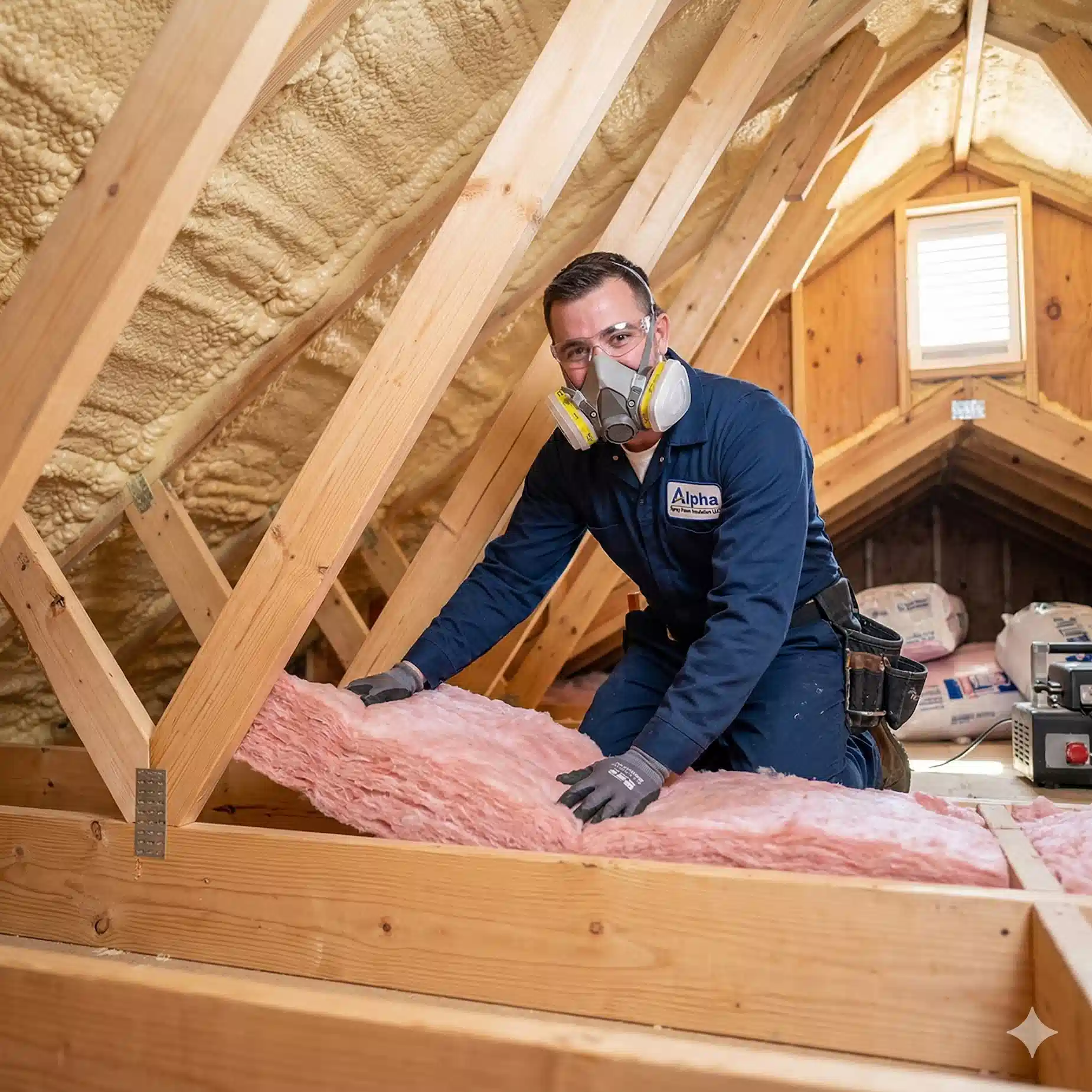
At Alpha Spray Foam Insulation LLC we are unique because we install BOTH Spray Foam and Fiberglass. We don’t need to push one product over the other. Instead, we act as a strategic partner to help you value-engineer your builds.
Here is the honest truth about balancing codes, costs, and performance in new construction.
The Real Challenge: Stricter Energy Codes

Building codes are aggressively pushing for tighter building envelopes. Inspectors are looking closely at Air Changes per Hour (ACH).
If your framing is complex, relying on traditional house wrap and standard insulation often leads to air leaks around rim joists, top plates, and complex rooflines. Failing a blower door test means tearing down drywall, hunting for leaks, and delaying your closing date.
To prevent this, you need to choose the right material for the right cavity.
Fiberglass: The Margin Protector
Fiberglass batts remain the most common insulation in new construction, and for good reason. It is a highly predictable, cost-effective material.
The Builder’s Pros:
- Cost-Efficiency: It keeps your upfront material and labor costs low, protecting your overall profit margin on the build.
- Speed: Fast installation means you can get your drywall crews in sooner.
- Interior Attenuation: It is the perfect, cheap solution for soundproofing interior walls (e.g., between the master bedroom and the laundry room).
The Builder’s Cons:
The Air Sealing Risk: Fiberglass does not stop air movement. To pass modern energy codes with fiberglass alone, your framing crews and insulators must execute flawless air sealing (caulking and foaming every single gap and penetration) before the batts go in. If they miss a spot, you risk failing the blower door test.
Spray Foam: The “Inspection Guarantee”
Closed-cell and open-cell spray foam are premium products that are rapidly becoming the standard for high-end custom homes and energy-efficient builds.
The Builder’s Pros:
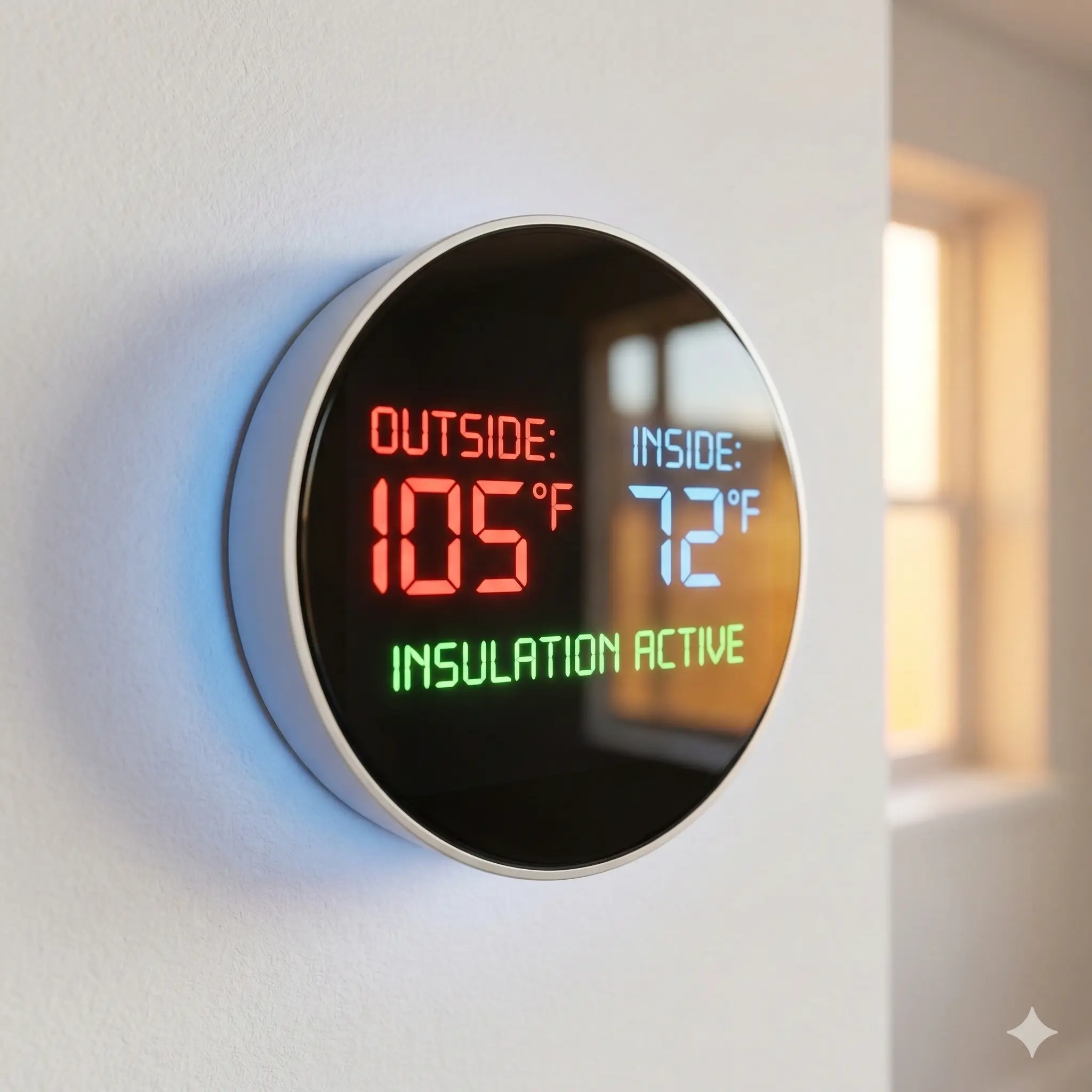
- Instant Air Seal: Spray foam expands to fill every crack, penetration, and irregular framing gap. It virtually guarantees that you will easily pass the blower door test on the first try.
- Structural Integrity: Closed-cell foam adds sheer strength to walls and roof decks, which is a massive benefit in storm-prone regions.
- Premium Selling Point: Homebuyers are actively looking for energy-efficient homes. Advertising “Fully Spray Foamed” allows you to command a higher selling price and market the home as a premium build.
The Builder’s Cons:
- Higher Upfront Cost: It will take a larger bite out of your insulation budget.
- Trade Coordination: Once foam is sprayed, moving electrical or plumbing lines is incredibly difficult. Your MEP rough-ins must be 100% complete and inspected before we spray.
The Sweet Spot: Value-Engineering with “Flash and Batt”
You don’t always have to choose one or the other. Because we install both, we frequently help builders execute the “Flash and Batt” hybrid system.
Here is how it works:
- We apply a thin layer (1 to 2 inches) of closed-cell spray foam directly to the exterior sheathing. This creates a perfect, permanent air and moisture barrier.
- We then fill the remaining wall cavity with cost-effective fiberglass batts to achieve the required R-value.
The Result?
You get the airtight performance and inspection-passing reliability of spray foam, combined with the budget-friendly volume of fiberglass. It is the ultimate value-engineering hack for modern builders.
Partner With a Contractor Who Understands Your Business
Your insulation contractor shouldn’t be a headache; they should be the reason you pass inspections on time.
Whether you need affordable fiberglass for a multi-family development or complete spray foam encapsulation for a luxury custom home, our crews show up on time, maintain clean job sites, and keep your schedule moving.
Ready to price out your next build?
Let’s value-engineer your blueprints. For a limited time, we are offering a special incentive for new commercial partners.
🏗️ $500 New Builder Partnership Bonus
Send us the blueprints for your next project.
If you are a first-time client and your accepted commercial bid totals $4,000 or more, we will instantly take $500 OFF your first installation.
(Offer valid until May 31, 2026).
About the Author: Kevin Delcid has extensive experience in the insulation industry, specializing in building science and energy efficiency solutions. Like owner of Alpha Spray Foam Insulation LLC has overseen thousands of successful spray foam installations across residential and commercial properties.